
How to Organize Your Medicine Cabinet Safely and Effectively
Learn expert tips for organizing your medicine cabinet to improve safety, accessibility, and health management. Village Pharmacy of Syosset explains how to keep your medicines secure and easy to find.
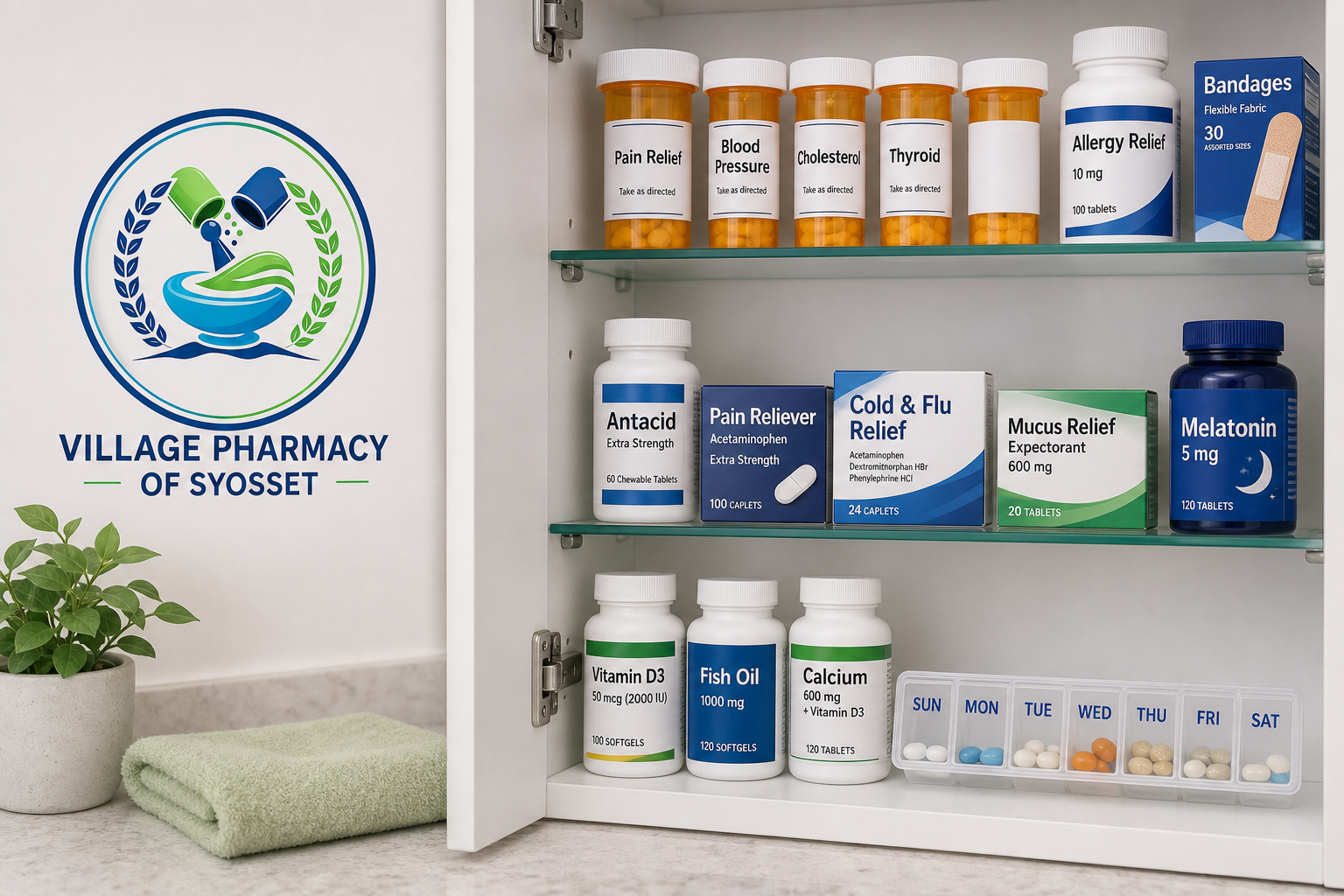
How to Organize Your Medicine Cabinet Safely and Effectively
A well-organized medicine cabinet can make a meaningful difference for your health routine. By storing your medications, over-the-counter products, and first-aid essentials safely and efficiently, you can help protect your family, prevent medication mix-ups, and ensure everything you need is close at hand. At Village Pharmacy of Syosset, we’re committed to helping our neighbors in Syosset and the surrounding Long Island community build healthy habits at home. In this guide, we’ll walk you through practical steps to create an organized, safe, and effective medicine cabinet.
Why Medicine Cabinet Organization Matters
We all lead busy lives, and it can be easy for medications and health products to accumulate in cabinets, drawers, and baskets around the house. However, regular organization isn’t just about tidiness—it can play a key role in family safety, medication adherence, and peace of mind. Here’s why an organized medicine cabinet is important:
- Prevents expired or unnecessary medication use
- Reduces risk of accidental mix-ups or ingestion, especially for children or older adults
- Makes it simpler to find the right product when needed
- Supports medication adherence by keeping your routine clear
- Helps you notice when refills or replacements are needed
- Makes sharing medication information with healthcare providers easier
Best Location: Rethinking the "Medicine Cabinet"
Despite the name, your bathroom medicine cabinet may not be the safest place for medication storage. Bathroom heat, humidity, and moisture can affect the stability of many medicines. Whenever possible, consider organizing your medicines in a cool, dry location—such as a high shelf in a closet, a dedicated kitchen drawer (well away from food and heat), or a secure box. Key guidelines:
- Avoid storing medicines in steamy bathrooms
- Keep items away from direct sunlight and heat sources
- Choose a location out of sight and out of reach of children and pets
Step 1: Remove Everything and Review
Start by taking all items out of your current medicine storage area. Place them on a clean surface, and begin sorting:
- Separate prescription medications, over-the-counter medicines, supplements, and first aid items
- Set aside any medications that are expired, unlabelled, or no longer needed
- Group similar items together for easier organization
How to Check for Expired Medications
- Look for the expiration or “discard after” date on the label or bottle
- Discoloration, change in smell, or crumbling are also signs to discard
- Never use medications past their expiration date without talking to a pharmacist or healthcare provider
Step 2: Safely Dispose of Unwanted Medicines
Never flush medicines down the toilet or throw them in the household trash if avoidable. Many areas—including Syosset—promote safe drug disposal to protect families and the environment. You can:
- Ask Village Pharmacy about proper medication disposal recommendations for your area
- Use medication take-back events or kiosks when available
- If immediate disposal is needed, mix medicines (do not crush tablets or capsules) with unappealing materials such as coffee grounds or cat litter in a sealed bag before discarding
- Remove personal information from prescription labels before discarding containers
Step 3: Clean the Cabinet or Storage Area
Before restocking, wipe shelves, containers, and baskets with soap and water or a safe household cleaner. Ensure the area is completely dry before reorganizing medicines to help prevent damage and mold growth.
Step 4: Organize by Category and Use
For easy access and maximum safety, group items by their purpose:
- Everyday prescription medications – in the most accessible section for those using them daily
- Occasional use medicines – such as allergy tablets, pain relievers, or antacids, grouped together
- First-aid items – such as bandages, antibiotic ointment, and thermometers, in a clearly labeled area
- Children’s products – stored separately from adult medicines, ideally in a child-proof container
- Vitamins and supplements – separated from prescription medications
Tips for Organizing:
- Use small clear bins, baskets, or drawer organizers to separate medicine types
- Keep items in their original containers with labels intact
- Store liquids upright to prevent leaking
- Store each family member’s medications in labeled sections or bins
Step 5: Secure and Safety-Proof
Safety should always come first, especially in homes with children, grandchildren, or frequent visitors. To improve medication safety:
- Install child-resistant locks on cabinets or boxes
- Store medicines out of sight and out of reach
- Avoid leaving medication out on counters or tables
- Keep a list of medications and doses somewhere safe, but not where children can access it
- Remind visitors (such as babysitters or house guests) that medicines are off-limits to children
Step 6: Make Refills and Usage Easy
Keeping tabs on medication schedules and refills is simpler with good organization habits:
- Keep a notepad or checklist inside the cabinet for quick notes
- Use a weekly pill organizer for those taking daily medications
- Place a refill reminder sticker or note for medications running low
- Use a medication calendar to track when to take or renew prescriptions
- Set phone or calendar alarms if helpful
Step 7: Keep Emergency and Seasonal Items Handy
Some supplies are only needed during certain times of year or during emergencies:
- Store essential emergency items, such as a working thermometer, fever reducers, and an up-to-date list of emergency contacts, in a front section
- Seasonal items (like allergy medications or cold remedies) can be grouped for quick access
Tips for Special Circumstances
Organizing Medications for Seniors and Caregivers
- Keep an updated medication list including name, dose, frequency, and prescriber
- Consider using multi-compartment pill organizers or medication synchronization options
- Review stored medications regularly to remove discontinued items
Travel or Away-from-Home Storage
- Keep a small travel kit (with a medication or supplement list) ready for trips
- Carry medications in their original labeled containers when leaving home
- Protect medicines from extreme temperatures when traveling
Sharing Medication Lists with Healthcare Providers
- Maintain a printed or digital medication list for doctor visits or emergencies
- Include all prescription and non-prescription items
- Update your list anytime there’s a change
Medication Safety and Your Local Pharmacy
Village Pharmacy is here to support you and your family in every aspect of your medication routine—including safe storage and organization. If you have questions about how to organize your medicine cabinet, understand medication labels, or safely dispose of unwanted medications, our friendly pharmacy team is always available to help.
Benefits of Working with Your Local Pharmacy
- Personalized advice on medication storage and organization
- Guidance on prescription refill planning and reminders
- Tips for managing multiple medicines safely
- Support with reading and understanding medication labels
- Answers to questions about over-the-counter and wellness products
For more information, visit Village Pharmacy of Syosset online or stop by our local pharmacy at 38 Cold Spring Rd, Syosset, NY 11791.
Frequently Asked Questions
### How often should I review my medicine cabinet?
It’s a good idea to review your medicine cabinet at least twice a year. Consider checking in spring and fall, or after any major family health changes.
### What should NOT be stored in the medicine cabinet?
- Never store medications where children can reach
- Avoid keeping medications in the bathroom (due to heat and moisture)
- Never mix unlabeled pills together in one container
### What about expired or leftover prescription medications?
Do not use expired medications without professional advice. Ask your pharmacy about safe disposal options.
### What should I do if someone accidentally ingests a medication?
Contact Poison Control (1-800-222-1222) and seek medical assistance right away.
When to Contact the Pharmacy
- If you have questions about any of your medicines
- If a label is unclear or missing
- For help organizing prescriptions on a schedule
- Before starting, stopping, or changing a medication
Conclusion
A safe, organized medicine cabinet isn’t just a convenience—it’s a reliable way to protect your family’s health and simplify your daily routine. Village Pharmacy of Syosset is proud to help our Syosset neighbors create healthy habits at home with supportive service and trusted advice. For more medication organization help or wellness tips, visit us in person or online at 🌐 villagepharmacyofsyosset.com.
This article provides general educational information and is not a substitute for individualized medical advice. Speak with a pharmacist or qualified healthcare professional about your specific medications and health needs.
Need a refill or have a question?
We offer free prescription delivery across the Syosset area. Sign up in under a minute.
Get free delivery